
Local Boards and the Workforce System
What Is a
Workforce Board?
Minnesota’s 16 local workforce boards are locally rooted, 51% private sector-led resource hubs dedicated to driving workforce development strategy in each region across the state. Each board includes leaders from education, chambers, employers, government, and community organizations.

Data Driven, Staying Responsive to Local Economies
In analyzing the local economy, including the characteristics of workers available and skills needed by employers, local workforce boards are the strategic bridge between jobseekers and employers, helping communities grow stronger by making sure the skills of local workers match the needs of local industries.
This includes everything from resume skills training for employees to human resources support networks for employers.
Aligning Efforts, Making Strategic Investments to Move the Needle
Local workforce boards coordinate services, foster partnerships, and tailor solutions to fit the strengths and challenges of each region, ultimately devising a local workforce strategy that drives public investment and aligns with partners and resources to meet local workforce needs.
Private Sector Led, Making the Match for Employers
All local workforce board membership is made up of a majority (51%+) of local business owners and employers. That’s on purpose! When local employers help shape workforce programming, we ensure that:
Investments in training are aligned with real opportunities in the local economy.
Employers are supported in finding well trained, high quality workers.
Employers are supported when business shifts happen- and there is a need for upskilling, retention, and more.
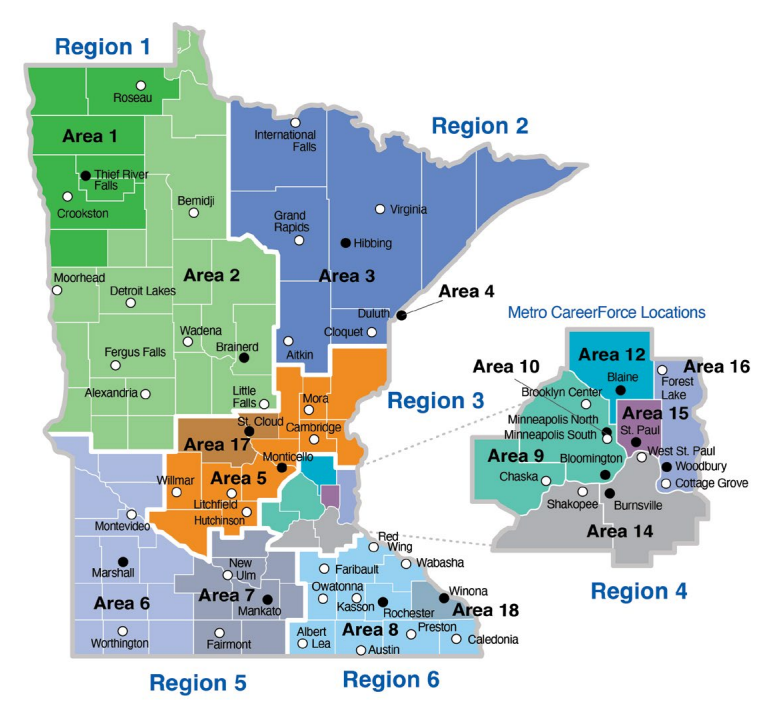
Minnesota’s 16 Local Workforce Boards
Each local workforce board represents a “local workforce development area” (LWDA). Find your LWDA and local workforce board here!
LWDA 1 – Inter-County Community Council
LWDA 2 – Rural Minnesota Concentrated Employment Program, Inc.
LWDA 3 – Jet – Northeast Minnesota Office Of Job Training
LWDA 4 – Duluth Workforce Development
LWDA 5 – Central Minnesota Jobs & Training Services
LWDA 6 – Southwest Minnesota Private Industry Council
LWDA 7 – South Central Workforce Council
LWDA 8 – Workforce Development, Inc.
LWDA 9 – Hennepin-Carver Workforce Development Board
LWDA 10 – Minneapolis Employment & Training
LWDA 12 – Anoka County Job Training Center
LWDA 14 – Dakota – Scott Workforce Services
LWDA 15 – Ramsey County Workforce Solutions Catrice O’neal – Director
LWDA 16 – Washington County Workforce & Veteran Services
LWDA 17 – Career Solutions
LWDA 18 – Winona County Workforce Council
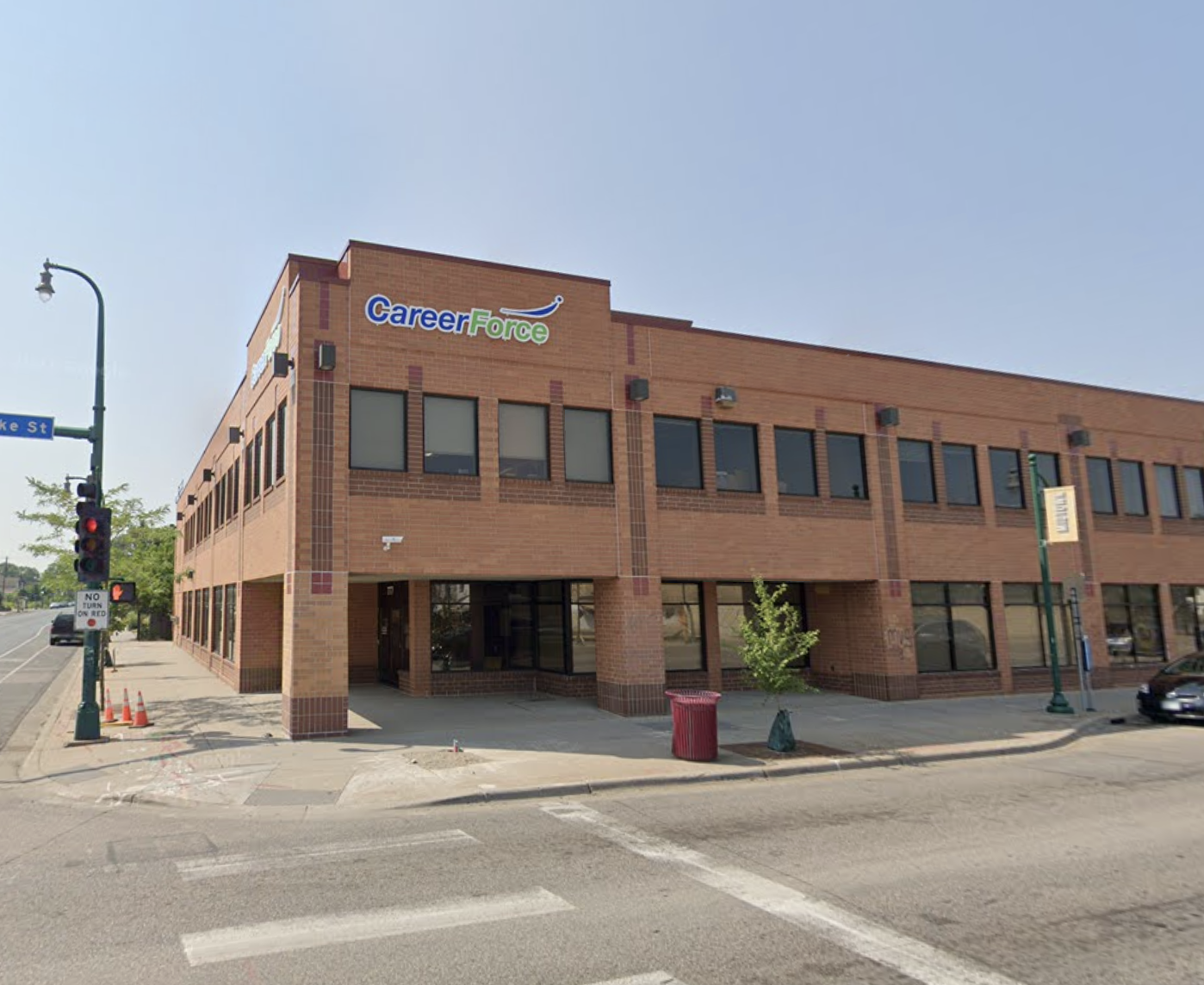
CareerForce Locations
Local Workforce Boards are CareerForce Partners.
The creation of CareerForce locations began in 1993, when federal, state, and local service providers were asked to create and define a “one-stop” concept focused on providing information and resources that enable individuals to achieve economic security and employers with the prepared workers they need to successfully compete in today’s economy.
Minnesota has nearly 50 CareerForce locations across the state; each is made up of a partnership of several employment and training programs, co-located in one building in an effort to reduce fragmentation and duplication of services.
Trusted Partners in Delivering Services
Minnesota’s local workforce boards implement state priorities, tailor solutions to local needs, and ensure Minnesotans have equitable access to employment, training, and opportunity.
Local workforce boards provide services that work to ensure that when Minnesotans access training - they’re doing so with an understanding of the job market and have the supports around them to get them through to a successful outcome. This leads to better outcomes for jobseekers and better stewardship of taxpayer funding.
Partnership with State and Federal Government includes:
Program Delivery and Innovation: Local workforce boards deliver core programs including Dislocated Worker, WIOA Adult and Youth, Youth at Work, Veteran Services, Services for the Blind, and Career Pathways. Boards build on these foundations with local innovation that increases quality outcomes and efficiency.
Data-Informed, Community-Rooted Services: Boards integrate labor market data with on-the-ground relationships to ensure that our services are relevant, effective, and responsive to regional economic trends. Our partnership with the Minnesota Department of Employment and Economic Development (DEED) Labor Market Information Office is crucial to this work!
Performance and Accountability: Local workforce boards are committed to strong outcomes, meeting and exceeding state and federal benchmarks, and providing transparent reporting on the impact of our programs.
Inclusivity and Access: Local workforce boards serve all populations statewide. They collaborate with schools, tribal nations, nonprofits, and employers to ensure inclusive access to training, jobs, and support for all workers in Minnesota, regardless of background.
Flexibility and Responsiveness: From industry shifts to local emergencies, local workforce boards adapt and respond quickly to deliver what communities and employers need, when they need it.
Collaborating with state & national Partners
Governor’s Workforce Development Board
The Governor’s Workforce Development Board (GWDB) is mandated and funded in part by the federal Workforce Innovation and Opportunity Act (WIOA). The GWDB works to strengthen the skills of Minnesota’s greatest asset — its workforce. The GWDB has a responsibility to advise the Governor on Minnesota’s workforce system.
The GWDB represents key leaders from business, education, labor, community-based organizations, and government. The GWDB has a statutory responsibility under the federal Workforce Innovation and Opportunity Act (WIOA), which provides leadership on opportunities and workforce strategies for the state. Learn more here.
National Association of Workforce Boards & Community Based Partners
MAWB and Minnesota’s local workforce boards also participate in the National Association of Workforce Boards (NAWB). NAWB represents and advocates for the more than 570 workforce development boards across the nation. By collaborating with business leaders, educational institutions, and economic developers, workforce boards create tailored programs that address the evolving needs of local businesses, jobseekers, and communities.
MAWB and Minnesota’s local workforce boards and service providers also work with community-based nonprofits that provide workforce development services in Minnesota. Learn more here.

WIOA Title I Programs (Adult, Dislocated Worker, and Youth)
The Federal Workforce Innovation and Opportunity Act (WIOA) outlines the service delivery system and four core programs.
Adult Education
and Literacy Act Programs
Wagner-Peyser Act Employment Services
Rehabilitation Act Title I Programs
Career Planning, Assessment, Job Placement
A dynamic economy requires a highly trained and flexible workforce.
There is a critical need for the workforce development system to better serve students who lack clear career goals or postsecondary aspirations. These individuals are often overlooked and may move in and out of the workforce without direction. Additionally, even students who pursue post-secondary education frequently do so without strong career guidance or realistic goals.
Minnesota’s workforce boards, bringing together leaders from education and the business community, are well positioned to collaborate with educational institutions to strengthen career services for students at both the high school and post-secondary levels.
Close coordination between education and employment & training services can support lifelong engagement with career services. Additionally, local workforce boards are closely connected to the evolving needs of their regional economies and can provide leadership in exposing individuals to in-demand career pathways.

Special Youth Services
Investing in youth employment and training programs is critical to arming youth with the skills they need to be successful in the workplace.
Work skills and the development of a work ethic are not just learned in classrooms; they are acquired through hands-on experience. Workforce boards deliver short-term employment and training opportunities to disadvantaged and at-risk youth in all 87 counties.
Employer Services
It is critical that employers have convenient access to information and services which are designed to meet their workforce needs.
Sector or industry partnerships are a key strategic element within some of the most successful state and local workforce development efforts in the country.
Board members, through their direct ties to business and/or as employers themselves, work as intermediaries to create effective solutions by brokering collaborative partnerships, providing incumbent worker training, and assessing industry needs prior to directing jobseekers toward specific employment opportunities.
Local boards and service providers have effectively worked across geographic boundaries to address the needs of regional economies in an efficient, effective, and timely manner.

Training
Increasingly, today’s jobs—including those at the entry-level—require far more technical and basic skills than similar positions did just a few decades ago.
Current opportunities, however, are not affordable or realistic options for many Minnesotans, particularly for those who are already working.
Workforce boards and workforce service providers serve as neutral brokers in identifying and connecting workers and employers to potential resources and educational institutions that can meet their needs.
Minnesota’s workforce strategies are market-driven; boards strive to ensure that training resources are targeted to meet the needs of local and regional economies. Furthermore, MAWB strongly encourages the development of short-term and part time entry level vocational programs which lead to entry level jobs and attainment of credentials.